 Preview unavailable.
Use the source link to view the original.
400 × 397 px · JPEG · The full frame
Sain (Recordiau) Cyf. · CC BY-SA 3.0
More to discover
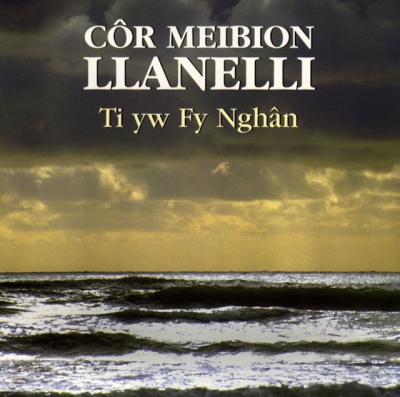 Ti Yw Fy Nghan
Sain (Recordiau) Cyf. · CC BY-SA 3.0
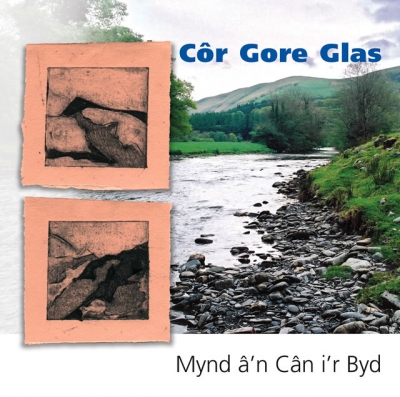 Mynd A'n Can I'r Byd
Sain (Recordiau) Cyf. · CC BY-SA 3.0
 Let The River Answer
Sain (Recordiau) Cyf. · CC BY-SA 3.0
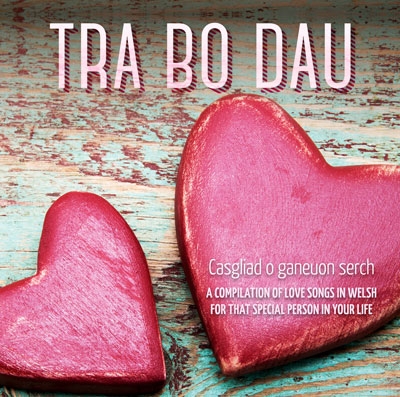 Tra Bo Dau
Sain (Recordiau) Cyf. · CC BY-SA 3.0
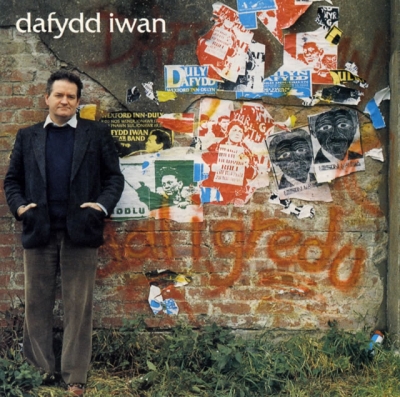
Dal I Gredu
Dafydd Iwan
Album artwork for Dafydd Iwan, provided through the SAIN Records collection on Wikimedia Commons.
Inside the image.
A square cover combines a full-length photograph of a man with a wall crowded by torn posters, painted lettering and graffiti. The man stands in the left foreground, facing the camera with his hands in the pockets of a dark, bulky coat. He wears a dark blue top and loose brown-grey trousers; his dark hair and face are visible, though small. His figure reaches almost from the top to the bottom of the image, set against the wall and a strip of weeds at its base.
The wall fills the background. Its rough, mottled surface shifts from pale brick and grey-brown at the left to ochre, rust and dark greenish tones across the centre and right. Overlapping scraps of paper form a dense, irregular cluster across the upper half and centre. The pieces are mostly white or cream, with red, blue, black and green printing, and show fragments of faces, blocks of lettering and small graphic marks. Several black-and-white portrait images stand out around the centre-right. The torn edges, creases and overlaps make the wall appear layered, while some lower sections remain exposed, including large, faded orange-red painted marks across the middle and lower right. Grass and small plants run along the bottom edge.
Large white lowercase lettering, “dafydd iwan”, sits near the upper-left corner, above and to the left of the man's head. The letters are rounded and slightly irregular, with a soft, hand-rendered appearance. Smaller writing appears on the pasted notices, but much of it is too small, broken or obscured to read confidently. The image has no separate border or large unoccupied area: the man and poster-covered wall compete for attention, and the bright scraps punctuate the more subdued, weathered colours. The treatment is photographic, with a visibly rough wall and layered paper textures; the main title is cleanly superimposed over the scene.
What the image evokes.
The cover feels like a portrait taken in the middle of a public argument. The man’s still, direct stance gives the left side a quiet anchor, while the wall behind him seems to have accumulated voices: notices pasted over notices, faces emerging from torn paper, and broad painted marks showing through underneath. The contrast is not simply between person and background; both seem embedded in the same place, though one is composed and the other restless.
The layered papers suggest a street wall repeatedly claimed and overwritten, with the texture of a noticeboard exposed to weather and time. Their reds and blues flare against the earthier brick and rust tones, lending the image a makeshift, documentary quality. The large white name is calm and legible against this clutter, almost like a signature placed directly on the scene. There is a tension between the dense visual noise and the man’s reserved expression: the wall appears to speak in fragments, while he remains still, leaving the relationship between the two open.
Associations are subjective readings, rather than documented influences or statements of the artist’s intention.
Read. Share. Reimagine.
These visual notes are offered under CC BY 4.0. Credit dbcovers, link to the source, keep the licence information and indicate any changes.
Ready-to-use attribution
Other attribution formats are allowed when reasonable for the medium and context. The artwork has its own separate licence.
Lettering & observation notes
- dafydd iwan — Upper left, above the man's head.
- Most writing on the torn posters is too small, partially covered or indistinct to transcribe confidently.
Artwork sources & licence.
Credit the author and source, link to the licence and indicate any changes. Share adaptations under compatible terms. Read the full licence for details.
- Source year
- 1991
- Source author field
- Sain (Records) Ltd
- Attribution
- Sain (Recordiau) Cyf.
- Collection
- SAIN / Wikimedia Commons
- Catalogue number
- SAIN SCD 4053
- Permission evidence
- Public VRT notice: 2017050910011681
- Source checked
- 20 October 2026

Year as recorded on the source file page; it may not represent the work’s first release. File unchanged; browser preview scaled proportionally.