 Preview unavailable.
Use the source link to view the original.
400 × 397 px · JPEG · The full frame
Sain (Recordiau) Cyf. · CC BY-SA 3.0
More to discover
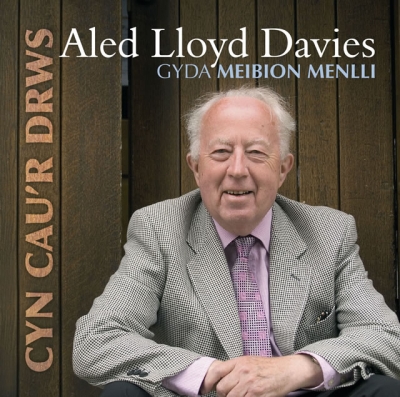 Cyn Cau'r Drws (Gyda Meibion Menlli)
Sain (Recordiau) Cyf. · CC BY-SA 3.0
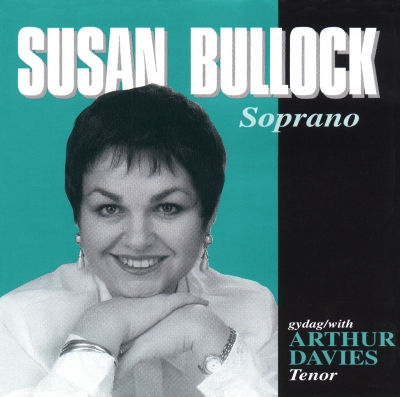 Soprano
Sain (Recordiau) Cyf. · CC BY-SA 3.0
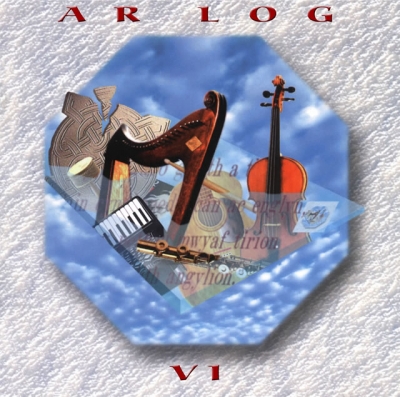 Vi
Sain (Recordiau) Cyf. · CC BY-SA 3.0
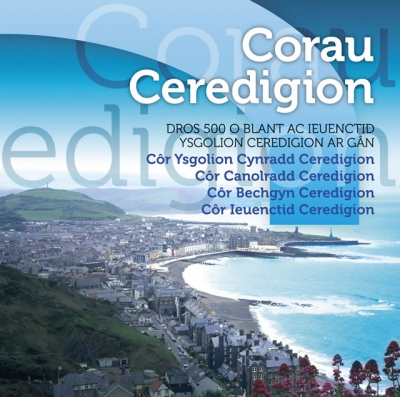 Corau Ceredigion
Sain (Recordiau) Cyf. · CC BY-SA 3.0
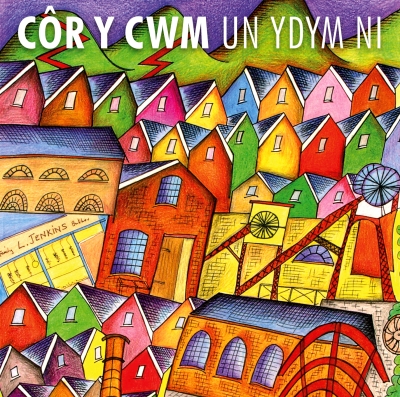
Un Ydym Ni
Côr Y Cwm
Album artwork for Côr Y Cwm, provided through the SAIN Records collection on Wikimedia Commons.
Inside the image.
A densely packed, hand-drawn townscape fills the square cover. Rows of steep-roofed houses press together across the middle and upper areas, while larger buildings and pieces of industrial-looking machinery overlap in the foreground. There is little open space: rooftops and walls are cropped by the left, right and lower edges, and the buildings recede in uneven tiers towards a narrow strip of green landscape and sky at the top.
Across the top, the title sits over the sky and upper rooftops. “CÔR Y CWM” appears in large, bold white capitals at the upper left, followed by the narrower white capitals “UN YDYM NI” stretching across the upper centre and right. The lettering is tall and clean-edged, with a dark shadow or outline that helps it stand out against the busy colours behind it.
The houses are individually outlined and brightly coloured in pink, orange, red, yellow, blue, green and purple. Their triangular roofs and small rectangular windows make a jagged, repeating skyline; some façades are partly hidden behind the houses in front. At the far upper edge, bands of green, yellow and blue suggest sloping ground beneath a purplish sky. On the left is a broad, low building with a blue roof and a warm tan façade, marked by rows of arched window shapes. Near the centre stands a tall red-orange building with a dark roof and several blue-paned windows. A small yellow sign or board on the left bears the readable wording “L. Jenkins”, with further fine writing that is too small to make out confidently.
In the lower half, angular yellow and red structures, beams and platforms cross in front of the houses. Several carry circular wheel-like forms with spokes; a larger grey-blue spoked wheel rises on the right. At the bottom centre-right, a substantial building has a broad blue-grey roof and a row of tall arched windows, with red-orange and yellow wall sections below. A narrow strip of green, scalloped shapes runs down the right edge beside the buildings.
The image is an illustration rather than a photograph. Black, sketchy outlines define the forms, and the coloured areas have visible irregular strokes and small marks, giving the scene a busy, drawn-on-paper appearance. Bright hues sit side by side with strong contrasts; the white title is the clearest text element, while the layered roofs, façades and machinery remain visually intricate throughout.
What the image evokes.
The town seems to have been built in a rush of colour, each roof and wall claiming its own patch of the picture. Its tightly packed houses bring to mind a miniature model town, but the overlapping buildings and crosshatched lines keep it from feeling neat or settled. The eye keeps finding another window, roofline or wheel tucked between the larger shapes.
The machinery gives the scene a playful industrial air. Its exaggerated beams and round, spoke-filled wheels could belong to a fairground contraption, a toy workshop or a fantastical machine threaded through the streets. There is a little friction between this mechanical bustle and the welcoming variety of the houses: the picture can feel festive, but its crowded construction also makes the town seem almost impossible to navigate.
The hand-drawn contours and intense, flat colours evoke an illustrated storybook or a lively piece of folk-inspired design. That is an impression rather than evidence of a particular tradition. The title’s formal, upright lettering adds a crisp band across the top, seeming briefly composed against the unruly scene below. Overall, the image holds cheerfulness and clamour together: bright, communal and full of small discoveries, yet so densely layered that it feels as if the town might keep growing beyond the edges.
Associations are subjective readings, rather than documented influences or statements of the artist’s intention.
Read. Share. Reimagine.
These visual notes are offered under CC BY 4.0. Credit dbcovers, link to the source, keep the licence information and indicate any changes.
Ready-to-use attribution
Other attribution formats are allowed when reasonable for the medium and context. The artwork has its own separate licence.
Lettering & observation notes
- CÔR Y CWM UN YDYM NI — Across the top, with “CÔR Y CWM” at upper left and “UN YDYM NI” extending across the upper centre and right.
- L. Jenkins — On the small yellow sign or board in the left foreground.
- The small writing on the yellow board beneath “L. Jenkins” is too fine to read confidently.
Artwork sources & licence.
Credit the author and source, link to the licence and indicate any changes. Share adaptations under compatible terms. Read the full licence for details.
- Source year
- 2013
- Source author field
- Sain (Records) Ltd
- Attribution
- Sain (Recordiau) Cyf.
- Collection
- SAIN / Wikimedia Commons
- Catalogue number
- Sain SCD2695
- Permission evidence
- Public VRT notice: 2017050910011681
- Source checked
- 20 October 2026

Year as recorded on the source file page; it may not represent the work’s first release. File unchanged; browser preview scaled proportionally.